
AI content generators like ChatGPT have become increasingly sophisticated. While they produce coherent, grammatically correct, and highly informative text, AI-generated content often has subtle patterns that humans can spot. Recognising these patterns can help distinguish human-written content from AI-generated text.
Common Signs of AI-Generated Content:
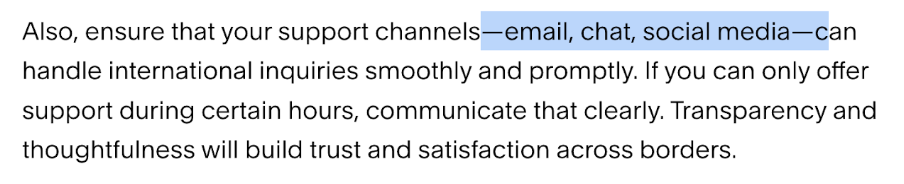
1. Excessive Use of Horizontal Lines (— or -):
AI often uses em dashes (—), hyphens, or HTML horizontal line tags (<hr>) frequently to break thoughts, reflecting its structured thought processes rather than natural human flow.
2. Formal Connective Words (Moreover, Furthermore, However):
AI text often leans on formal transitions (‘moreover,’ ‘furthermore,’ ‘however’), which makes it feel over-structured, so focus your copy on what your audience actually cares about and say it plainly.

3. Overuse of “Enhance”:
The word “enhance” is disproportionately common in AI-generated text. Humans tend to vary synonyms like improve, boost, elevate, or strengthen. If you’re worried about word salad, focus on what Google actually values.

4. Perfect Sentence Length:
AI tends to produce evenly sized, balanced sentences. Human writers naturally vary sentence lengths, mixing short and punchy sentences with longer, more complex ones.
Which means, if you see articles with very evenly written paragraphs, then it is most likely AI-written.
Notice how every other paragraph lands in the same 12-14-word range. That perfectly even cadence is typical of large-language-model output. Human writers usually mix short, punchy lines with longer, winding ones, creating natural rhythm and emphasis. When you see a paragraph where every sentence is almost identical in length, it’s a strong hint the text was AI-generated.

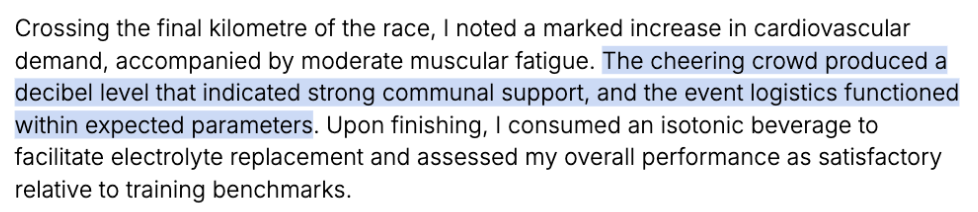
5. Neutral, Objective Tone:
AI writing frequently defaults to a neutral, detached tone, even in contexts where emotion or subjectivity would naturally appear in human writing. This is a classic give away, and one that could be
Even though this is a personal milestone, the language stays clinical (“decibel level,” “functioned within expected parameters”) instead of expressing excitement or relief. That neutral, report-style phrasing is a tell-tale sign of AI defaulting to an objective tone where a human writer would naturally show emotion.
6. Absence of Personal Anecdotes or Experiences:
AI-generated text rarely includes personal anecdotes or experiential references, unlike human-written content, which often draws on individual experiences and emotions.
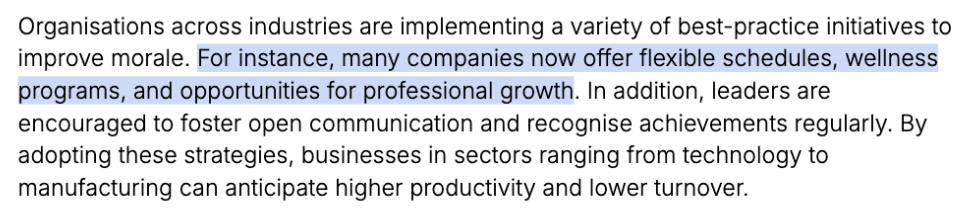
The sentence claims to give examples but lists only broad, catch-all perks (“flexible schedules,” “wellness programs,” “professional growth”) that could apply to nearly any firm. A human expert would likely cite a specific initiative (“Spotify’s ‘Flexible Public Holidays’ policy’ or “3M’s 15-Per cent Innovation Time”), whereas the AI falls back on boilerplate benefits.
7. Generic Examples and Lack of Specificity:
AI often relies on generic or overly broad examples rather than providing precise, context-rich details or niche insights typical of human expertise.
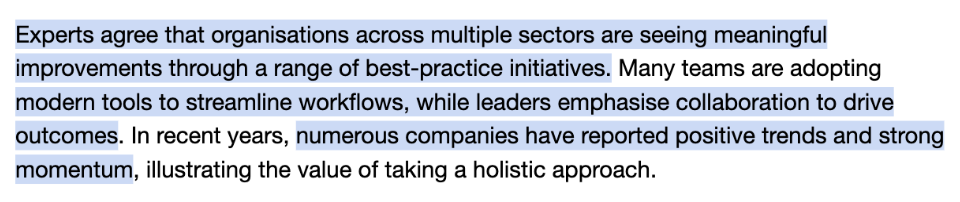
Claims to give examples but uses broad catch-alls (“meaningful improvements,” “multiple sectors,” “best-practice,” “modern tools,” “positive outcomes,” “holistic”) with no names, dates, metrics, or links, classic generic AI phrasing.
8. Repetition of Key Terms:
AI-generated text often repeats key terms and phrases, sometimes unnaturally, as it attempts to emphasise relevance to a given topic or keyword. This is particularly true when the content being briefed to AI is being done so by a performance marketer / SEO.
Unnatural keyword echo (sustainability ×5) signals AI following an SEO brief rather than writing for humans; the repetition breaks rhythm and reads machine-optimised.

9. Repetition of Key Terms:
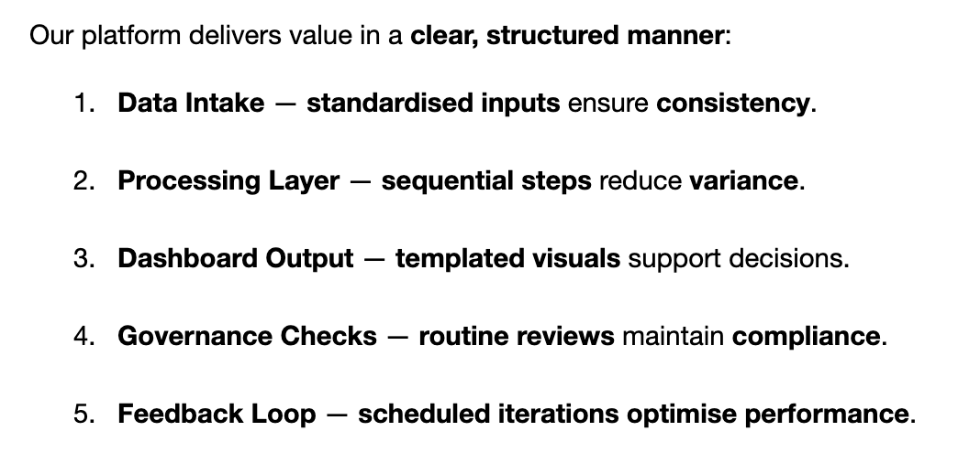
AI frequently relies heavily on numbered or bullet-pointed lists, presenting information systematically and mechanically.
10. Lack of Subtle Humour or Irony:
AI-generated content rarely includes subtle humour, irony, or nuanced sarcasm, elements commonly found in authentic human writing. For now… AI is not leaning into these nuances unless it is specifically asked.

11. Limited or Unusual Use of Emojis:
AI-generated content often avoids emojis or uses them sparingly and awkwardly, missing the natural emotional emphasis and casual usage found in human writing, especially when marketing to younger audiences.

Practical Application
Next time you read an article, email, or online post and wonder if AI wrote it, check for these signals. Understanding these patterns not only helps spot AI content but also encourages the creation of more authentic, engaging, and distinctly human writing.
Need help with your marketing or content? Let’s work together
