
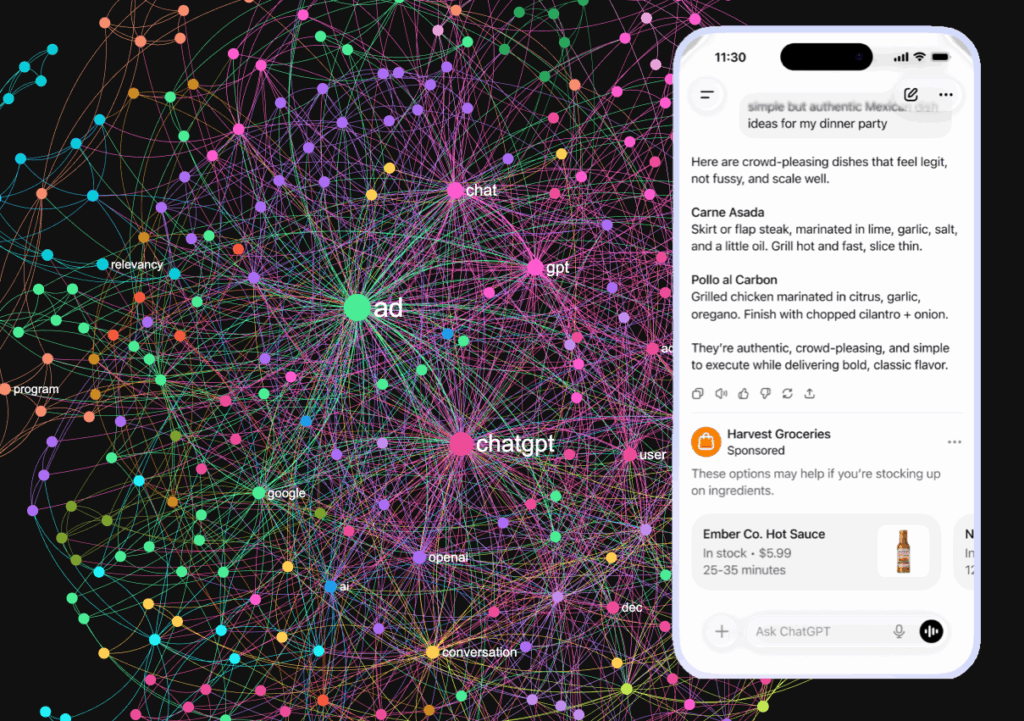
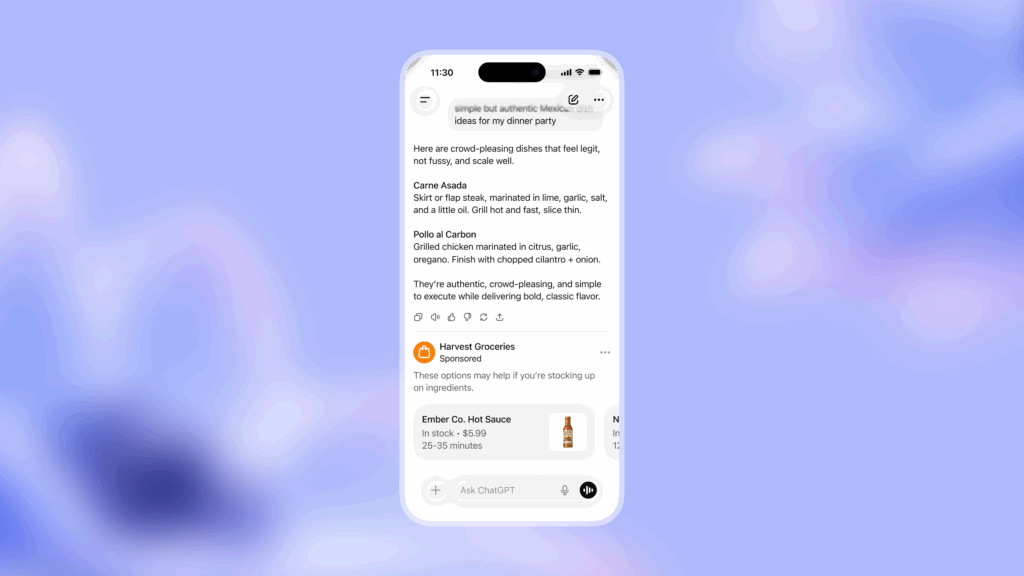
GPT Ads are no longer a future channel.
They are here, with Australia and New Zealand included in the early rollout.
For marketers, this is not just another paid media placement. It is a shift in how brands show up when people are asking questions, comparing options, solving problems and trying to make decisions inside AI conversations.
At Intender, we believe this will reward brands that understand context, not just keywords.
The big mistake marketers will make with GPT Ads
Most marketers will try to treat GPT Ads like search.
They will ask:
“What keywords should we target?”
That is the wrong starting point.
The better question is:
“What situations make our brand useful?”
People do not talk to AI in neat keyword phrases. They explain what is happening. They describe symptoms. They ask messy, human questions.
That means the real opportunity is not just targeting what people say. It is targeting what they mean.
Why context hints matter
Early GPT Ads setups appear to include familiar paid media inputs like ad groups, destination URLs and CPC bidding. But the most interesting input is context hints.
Context hints help guide where your ads may be relevant across conversations, topics and user needs. They are not the same as exact match keywords. They are closer to intent signals, problem states and decision moments.
For example, a car brand might be tempted to target:
“7-seat SUV”
But a real person may say:
“We’ve got our third child on the way and suddenly nothing fits in the car.”
Or:
“Every weekend we need to take two cars because we can’t fit the kids, the dog and all the gear.”
Same intent. Completely different language.
That is why GPT Ads need a different strategy.
What targeting should brands think about?
The early opportunity is likely to sit across four layers:
1. Ad group structure
Group campaigns around problems, use cases, customer moments and product categories.
2. CPC bidding
Treat GPT Ads like a performance channel, but expect learning curves as competition, auction dynamics and formats evolve.
3. Destination URLs
Send people to pages that answer the situation they are in, not just generic product pages.
4. Context hints
Build targeting around the conversations, symptoms, questions and decision triggers that make your brand relevant.
This is where old-school keyword planning needs to evolve into context planning.
How Intender approaches GPT Ads
Intender’s view is simple: GPT Ads should not be planned as a bolt-on media test.
They should sit inside a broader ChatGPT Ads strategy that connects AI search, paid media, content, landing pages and measurement.
Our approach starts with the human moment behind the search.
We look at what people are trying to solve before they know what to search for. Then we turn those moments into campaign strategy, context hints, content angles and landing page journeys.
For example:
A finance brand should not only target “best home loan rate”. It should understand the person saying, “I earn good money, but the bank keeps treating me like I’m risky.”
A beauty brand should not only target “body lotion”. It should understand the person saying, “My skin feels dry and bumpy and I don’t know what actually works.”
A B2B software brand should not only target “workflow automation tool”. It should understand the person saying, “My team is drowning in manual admin and I don’t know where the bottleneck is.”
That is the difference between keyword targeting and context targeting.
What brands should do now
Do not rush in with a recycled Google Ads keyword list.
Start by mapping the real-world moments that create demand.
At Intender, we help brands prepare for GPT Ads by building:
- Intent and symptom maps
- Context hint strategy
- AI search and discovery planning
- Landing page recommendations
- Paid media test plans
- Measurement and reporting frameworks
We then connect GPT Ads with broader channels like SEO, paid search, content, social and retargeting, so the test does not sit in isolation.
The Intender view
GPT Ads will not be won by the brands with the biggest keyword list.
They will be won by the brands that understand the customer’s situation before the customer knows what to call it.
That means understanding the questions, anxieties, comparisons, symptoms and decision moments that sit behind demand.
The prompt is becoming the brief.
And the brands that learn how to show up usefully inside those moments will have an advantage.
If you are thinking about GPT Ads in Australia or New Zealand, Intender can help you build the strategy, targeting and test plan before the market gets crowded.
Want to prepare your brand for GPT Ads?
Speak with us about building your first AI Ads readiness plan.
